
Crop and growth stage
Young transplants and nursery stock sit in the 30–40% band; mature fruiting crops take 50–70%.
Agricultural shade net is a knitted HDPE fabric that reduces sunlight intensity by 30–95% while air still moves through it. Growers use it over orchards, greenhouses and livestock shelters to lower temperature and prevent sunburn. Standard rolls are 1–6 m wide and 50 m or 100 m long, in green, blue, beige, brown or black.
Nursery and young transplants
25–30 g/m²Vegetables and greenhouse covers
On requestTomato and pepper production
On requestHot-climate orchards, 3-pin woven
3-pin wovenShade houses and livestock cooling
On request| Grade | Shade rate | Construction | Roll width | Colour | Typical use |
|---|---|---|---|---|---|
| Light | 30–40% | Knitted HDPE | 1–6 m | Black, dark green | Nursery, livestock shelter |
| Medium | 50% | Knitted HDPE | 1–6 m | Green, black | Vegetables, greenhouse |
| Medium-dark | 70% | Knitted HDPE | 1–6 m | Green, black | Tomato, pepper |
| Heavy | 85% | 3-pin woven | 1–6 m | Green, blue, beige, brown, black | Orchards, hot climates |
| Maximum | 95% | Knitted HDPE | 1–6 m | Black, green | Shade houses, cooling |
Roll widths 1–6 m on all grades. Lengths 50 m and 100 m as standard; other lengths produced to order.
Young transplants and nursery stock sit in the 30–40% band; mature fruiting crops take 50–70%.
Above 35 °C peak summer, move one grade darker than the crop guide and confirm ventilation.
Choose roll width from the bay spacing, then buttonhole or eyelet spacing from the wind load on site.
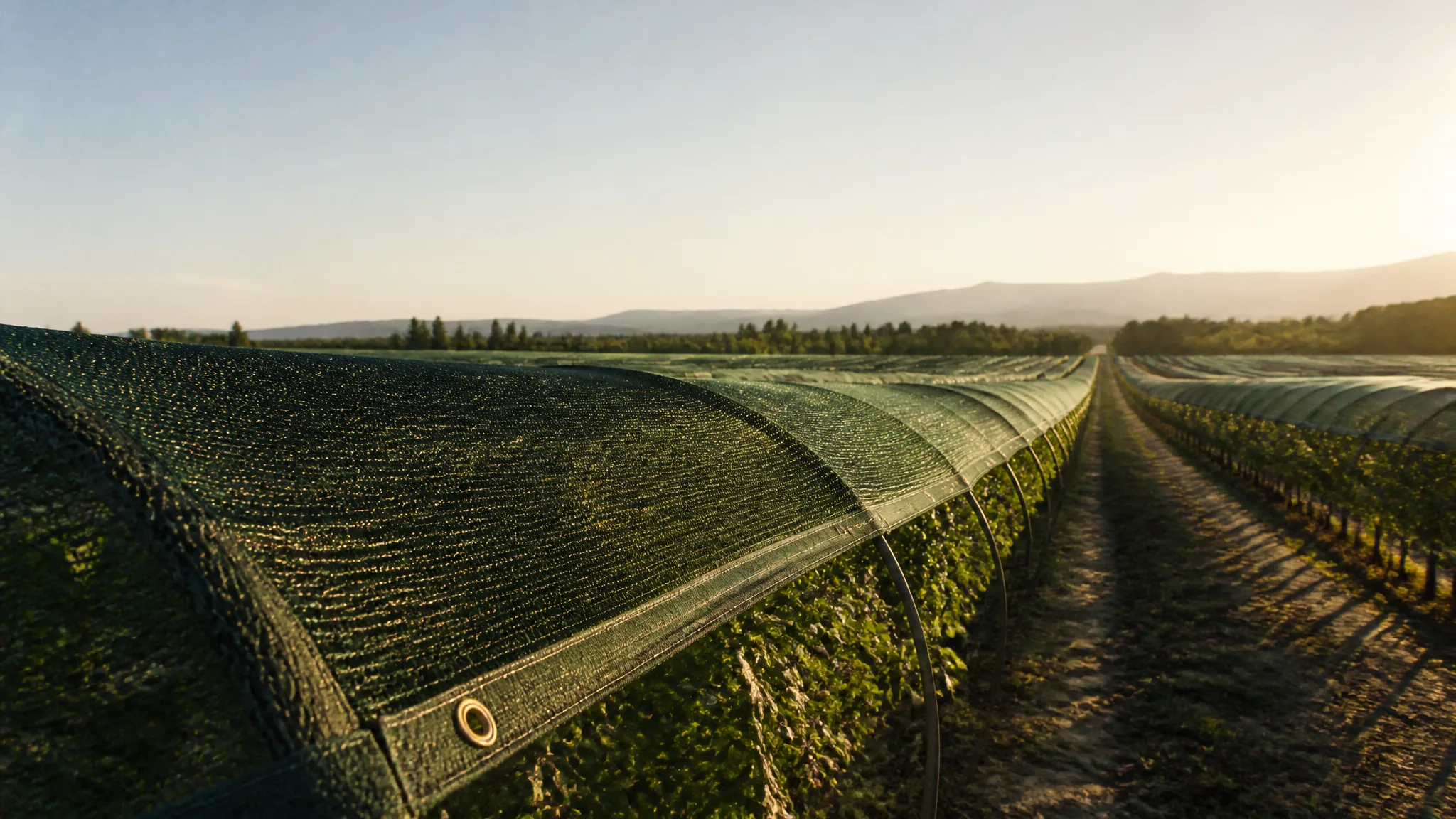
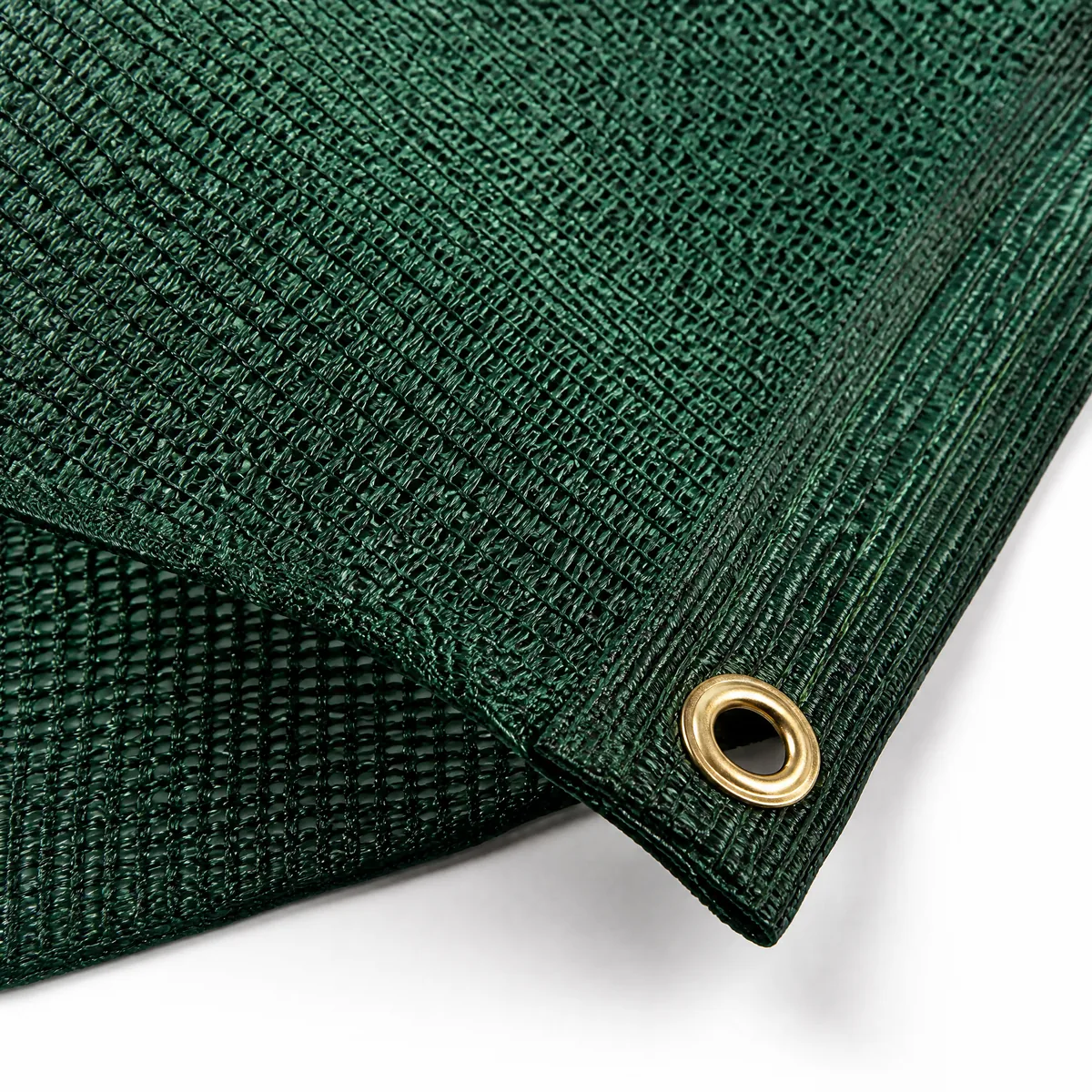
Match the grade to the crop and the climate band: 30–40% for nursery and young transplants, 50% for vegetables, 70% for tomato and pepper, 85% for orchards in hot climates, 95% for shade houses and livestock cooling.
Reply within 12 working hours